If you think feeding a cat is as simple as filling its bowl, you might be surprised to learn that feline nutrition is a true art form. Cats are finicky creatures, but they’re also vulnerable to nutritional imbalances. Their diet directly affects their energy levels, coat, weight, and even their behavior.
In general, kittens should eat 3 to 4 times a day, while adult cats can eat 2 to 3 times a day. It’s important to establish a regular feeding schedule and always provide your cat with fresh, clean water.
Types of cat food

There are two main types of cat food on the market: wet food and dry food. Each has its own advantages and disadvantages.
Wet food:
- Benefits: It contains more moisture, which is beneficial for the health of cats’ kidneys and urinary tract.
- Disadvantages: It is more expensive than dry food and may have a shorter shelf life.
Dry food:
- Advantages: It is more economical than wet food and has a longer shelf life.
- Disadvantages: It may be less appealing to some cats and have a lower moisture content.
A complete, high-quality food should include:
- Animal proteins (chicken, fish, turkey, or lamb).
- Healthy fats, especially omega-3 and omega-6.
- Vitamins and minerals (zinc, iron, vitamins A, E, D, and B complex).
- Natural fibers to aid digestion.
What you should avoid at all costs
Even if your cat looks at you with those irresistible eyes, there are certain foods that are strictly off-limits in its diet. Some can cause anything from an upset stomach to severe poisoning.
Always avoid giving your cat:
- Chocolate or coffee (Even a single piece of chocolate can cause tachycardia or tremors in kittens.)
- Onion, garlic, and leek.
- Cooked bones or fish bones.
- Dairy products (many cats are lactose intolerant).
- Food with salt or seasonings.
- Alimentos crudos sin control sanitario (carne o pescado).
How much should a cat eat?
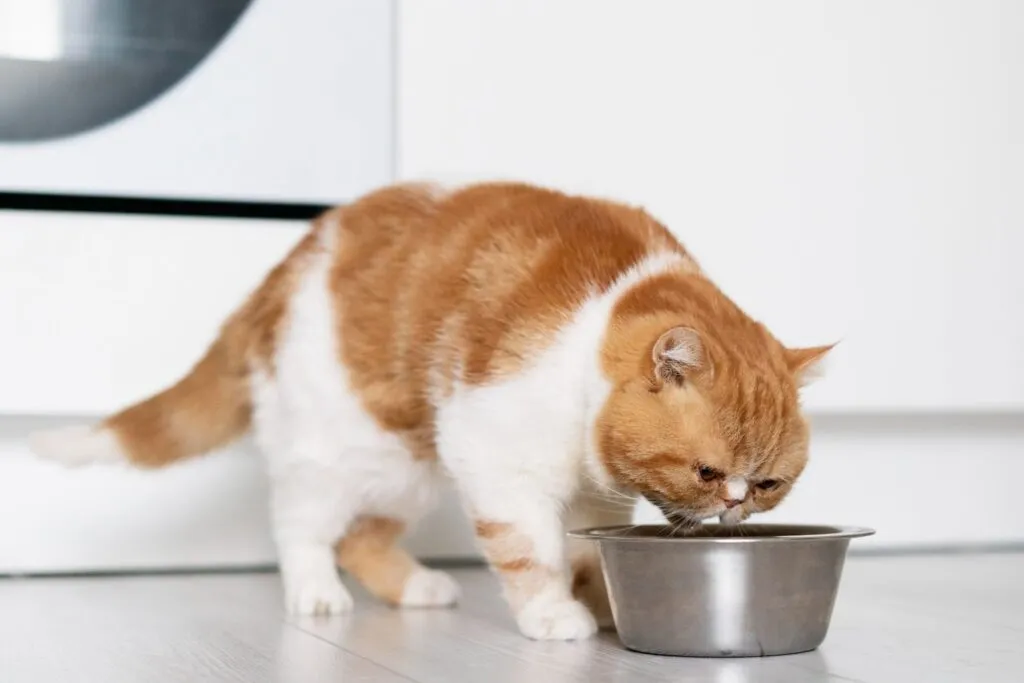
Determining how much food your cat needs each day is key to keeping it at a healthy weight and ensuring a balanced diet. Not all cats should eat the same amount: their age, activity level, current weight, and health directly influence their daily caloric needs (kcal/day).
Below is a guide based on recommendations from the WSAVA (World Small Animal Veterinary Association) and the AAHA (American Animal Hospital Association):
| Cat’s weight (kg) | Recommended calories per day | Example of a daily serving (kibble averaging 3.5 kcal/g) | BCS/MCS Adjustment |
| 2 kg | 70 – 90 kcal | 20–25 g of dry food | +10% if you are underweight / −10% if you are overweight |
| 3 kg | 100 – 120 kcal | 28–35 g | +10% if you are underweight / −10% if you are overweight |
| 4 kg | 130 – 160 kcal | 37–45 g | +10% if you are underweight / −10% if you are overweight |
| 5 kg | 160 – 200 kcal | 45–55 g | +10% if you are underweight / −10% if you are overweight |
| 6 kg | 180 – 230 kcal | 50–65 g | +10% if you are underweight / −10% if you are overweight |
| 7 kg | 200 – 260 kcal | 55–70 g | +10% if you are underweight / −10% if you are overweight |
Taking care of your cat’s diet is one of the purest ways to show your love for them. A balanced diet, made with high-quality ingredients and tailored to your cat’s age and needs, can extend their life and improve their well-being at every stage.
If your feline companion is an essential part of your family, give them the best food possible. Consult your veterinarian about the best diet for your cat based on their health, and be sure to maintain a consistent feeding routine.
FAQs
- Can I feed my cat homemade food?
Yes, but with caution. Homemade food can be healthy if prepared under the supervision of a veterinarian or a feline nutritionist. It’s important to balance the proportions of protein, fat, and fiber, as well as to include vitamin supplements.
- How much water should a cat drink each day?
An adult cat should drink about 50 ml of water per kilogram of body weight per day. If your cat weighs 5 kg, it should drink about 250 ml a day.
- How can I tell if my cat is eating too much?
Overweight cats often lose their agility, tire easily, and may have a rounded abdomen. If you notice that your cat is constantly begging for food but isn’t expending much energy, consult your veterinarian.
- Is dry or wet cat food better?
Both options are fine. Ideally, you should combine both, adjusting the portions to avoid consuming too many calories.
- How often should I switch my cat’s food brand?
It’s not advisable to switch brands or types of food frequently, as cats are sensitive to changes. If you decide to do so, make a gradual transition over 7 to 10 days by mixing the new food with the old to avoid digestive problems.