Cats are extraordinarily clean and methodical animals. That’s why, when a cat changes its litter box habits and starts eliminating outside its usual space, it’s not doing so on a whim or out of disobedience. This behavior may indicate that something about its health, its environment, or its litter box isn’t quite right.
At Sepicat, we know how important it is to maintain harmony at home and ensure your cat’s comfort. The litter box is a key element of their daily well-being and can also provide clues about their physical and emotional state. When a cat avoids using its litter box, analyzing the possible causes with patience and respect is the first step toward resolving the situation.
Below, we’ll review the main reasons that can disrupt your cat’s litter box behavior and offer practical recommendations to help them regain their peace of mind and start using their litter box comfortably again.
1. Differences Between Territorial Marking and Inappropriate Elimination
The first step in addressing this behavior is to identify what type of elimination your cat is engaging in. In feline behavior, there are two distinct behaviors that are often confused: territorial marking and inappropriate elimination.
Recognizing the differences between them will help you determine what might be happening:
- Urine marking: serves a communicative function and helps define territory. The cat usually stands upright, with its tail raised and quivering slightly, and sprays a small amount of urine on vertical surfaces, such as walls, door frames, or furniture. It may continue to use its litter box normally.
- Inappropriate elimination: This occurs when a cat urinates or defecates outside its litter box—for example, on the floor, carpets, sofas, or clothing. This behavior may indicate that the cat is seeking a more comfortable or safe place, or that there is a health issue.
Observing where and how your cat relieves itself will help you determine whether it is avoiding the litter box due to behavioral issues or showing signs that require veterinary attention. If the change occurs suddenly, it’s best to consult your veterinarian to rule out medical problems.
2. Health Issues That Affect Litter Box Habits
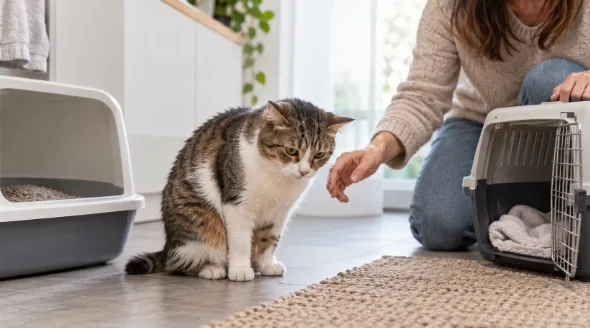
Before rearranging the layout of your home or trying different types of litter, it’s essential to visit the vet to rule out a health issue. When a cat has a urinary tract infection or inflammation, urinating can be painful. As a result, the cat may associate that discomfort with the litter box and seek out other places to relieve itself.
Conditions that can affect litter box use include:
- Feline Lower Urinary Tract Disease (FLUTD): This term encompasses various conditions affecting the lower urinary tract, such as feline idiopathic cystitis and the presence of urinary crystals or stones.
- Urethral obstruction: This is a serious veterinary emergency that particularly affects male cats. If your cat repeatedly enters the litter box, strains, and is unable to urinate, he needs immediate veterinary care.
- Joint or digestive discomfort: Constipation can cause pain during bowel movements, while osteoarthritis in older cats can make it difficult for them to enter litter boxes with high sides.
If the veterinarian rules out a medical cause, it’s time to examine other factors, such as hygiene, the type of litter, and the characteristics of the environment.
3. Litter Characteristics That Cause Rejection
A cat’s sense of smell is very sensitive, and its paw pads perceive the characteristics of the surfaces it walks on. For this reason, the type of litter you choose directly influences whether your cat will accept its litter box. An uncomfortable texture or an overly strong scent can cause your cat to stop using its litter box, even if the box is clean.
Factors that can cause rejection include the following:
- Perfumes and artificial scents: Strong fragrances can be unpleasant for some cats, even when they’re pleasant for people.
- Excessive dust: Litter that generates too much dust can be uncomfortable when digging and can get on the cat’s paws.
- Uncomfortable texture: Many cats prefer fine-grained, soft-to-the-touch litter. Materials that are too coarse can cause rejection, especially if the cat has sensitive paws.
If you decide to switch litter types, do so gradually over several days by mixing small amounts of the new product with the old one. Observe your pet’s reaction and adjust the transition based on how well they accept it.
4. Location, Hygiene, and Stress at Home
In many cases, a cat’s refusal to use the litter box is related to the conditions of the space and the daily maintenance of the litter box.
Litter Box Location
Placing the litter box next to the food or water bowl can be uncomfortable for cats, who generally prefer to keep their eating and elimination areas separate. It’s also best to avoid noisy or high-traffic areas, such as spaces near appliances or busy hallways.
Ideally, choose a quiet, accessible spot with enough privacy, where the cat can come and go without interruption. If the cat cannot find a suitable environment to relieve itself, it may start avoiding the litter box and look for another place where it feels safer.
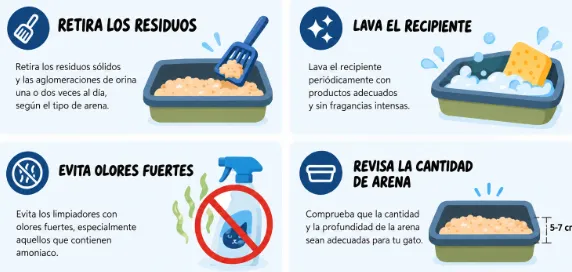
Cleaning and Maintaining the Litter Box
Cats tend to be very particular about the cleanliness of their litter box. If waste builds up, they may look for another place to relieve themselves.
To keep the litter box in good condition:
Stress and Living with Other Cats
Changes in routine, moving to a new home, frequent visitors, or the arrival of a new pet can cause stress and alter a cat’s bathroom habits.
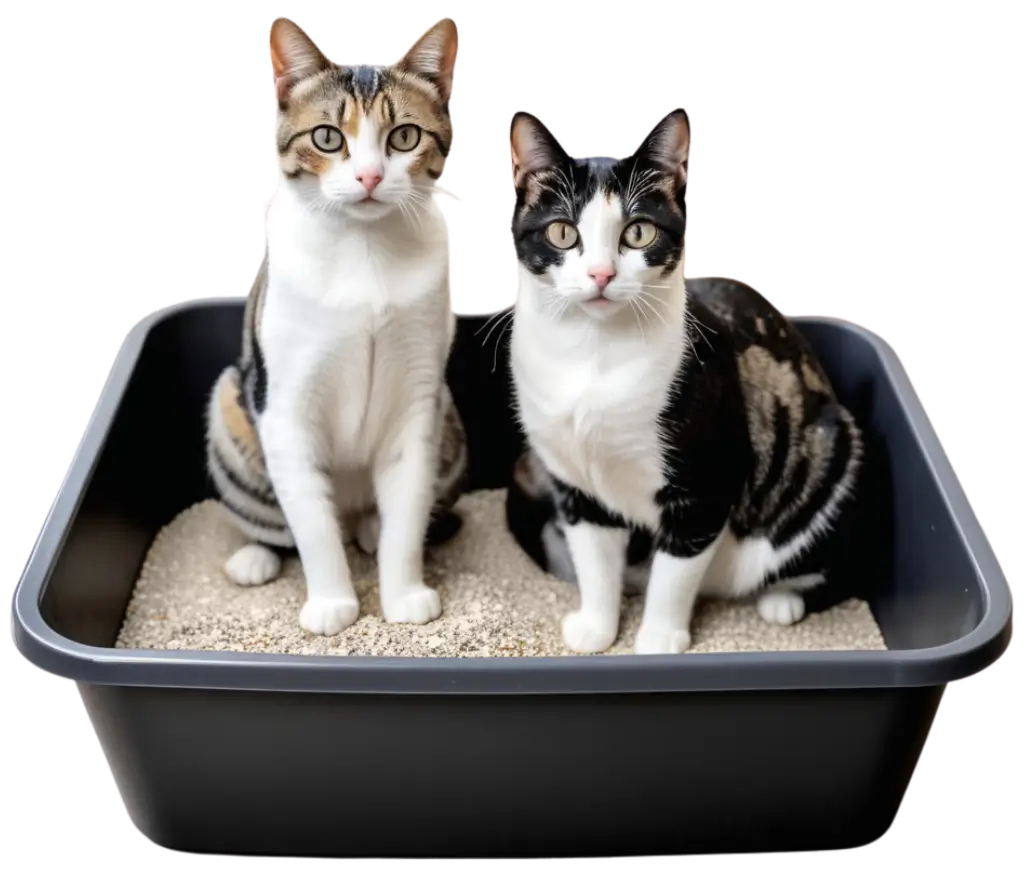
In multi-cat households, competition for resources can also make it difficult for cats to access the litter box. As a general recommendation, it’s best to have one litter box per cat plus one extra, placed in different areas of the house.
5. Steps to restore normal use of the litter box
If your cat has started using the bathroom in undesirable places, you can help it get back on track with patience and a few changes to its environment. Before taking these steps, be sure to rule out any potential health issues with your veterinarian.
Step 1. Clean the affected areas
Use pet-specific enzymatic cleaners in the areas where your cat has urinated or defecated. These products help remove organic residue and odors that could encourage the behavior to recur.
Step 2. Place a litter box in their preferred spot
If your cat usually goes to the bathroom in a specific area, you can temporarily place a litter box there. Choose an easily accessible container and try a litter that your cat finds comfortable.
Step 3. Change the location gradually
Once your cat is using the litter box regularly, you can gradually move it toward its permanent location. Do this in small steps and observe your cat’s reaction before continuing.
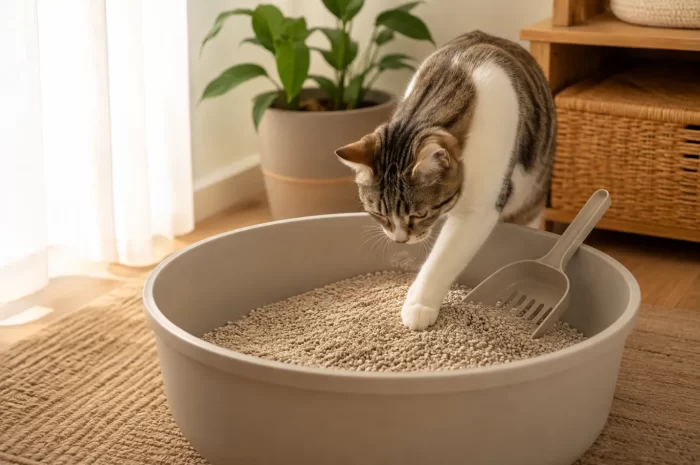
Step 4. Try an open litter box
If you use a covered litter box, try removing the lid. Some cats prefer open boxes because they offer better ventilation and a clearer view of their surroundings.
Throughout the process, avoid scolding or punishing your pet. Punishment can increase their stress and make the problem worse. Instead, try to provide a quiet, clean, and accessible space, and let them get back into their routine without forcing them.
6. Find the Right Litter for Your Cat

At Sepicat, we have over 35 years of experience developing feline hygiene solutions. We understand that every cat has specific preferences regarding texture, absorbency, and odor control, which is why we offer different options to make maintaining your litter box easier.
Our range includes three product lines:
- Clumping litter: made with selected bentonites that form clumps that are easy to remove, making daily cleaning a breeze. The Lightweight line offers a lighter, more convenient option.
- Absorbent litters: designed to retain moisture and help control odors, keeping the litter box in good condition.
- Biodegradable litters: made with plant fibers and designed for those seeking plant-based alternatives for their pets’ hygiene.
If you’d like to find out which variety best suits your cat’s needs, we invite you to use our Sepicat Litter Selector. This tool will help you explore the available options and find the right choice for your home.
Frequently Asked Questions
1. When should I take my cat to the vet?
If your cat suddenly stops using the litter box, shows signs of pain, or changes its urination habits. If your cat tries to urinate but can’t, it needs immediate veterinary care.
2. What size should the litter box be?
It should be large enough for your cat to enter, turn around, and dig comfortably, without the edges hindering access.
3. Is a covered or uncovered litter box better?
It depends on your cat’s preferences. If your cat avoids the covered litter box, try an open one and see if your cat uses it more comfortably.
4. How can I get my cat used to new litter?
Switch the litter gradually over several days by mixing small amounts of the new litter with the old one.
5. How many litter boxes do I need if I have multiple cats?
The general recommendation is to have one litter box per cat plus one extra, placed in different areas of the home.