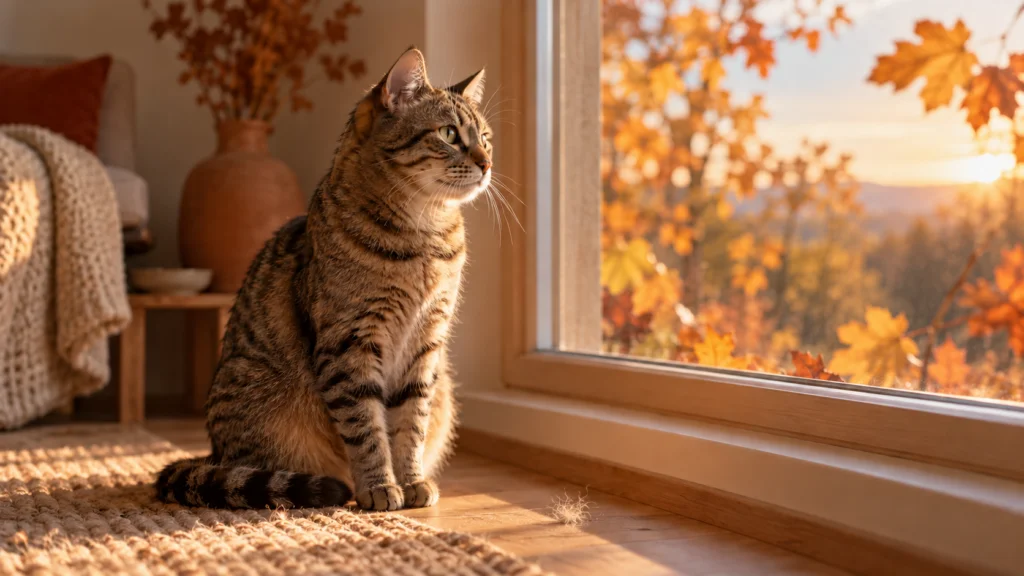
Fall brings cooler days and changes to pets’ routines. During this season, it’s common to notice an increase in the amount of fur cats shed around the house, covering couches, rugs, and clothing.
This process is a biological response through which cats renew their coats to adapt to temperature fluctuations and changes in daylight hours. However, this phase involves more than just vacuuming more frequently. When cats groom themselves by licking, they ingest some of the loose fur, which can lead to hairballs and cause digestive discomfort.
At Sepicat, we understand that caring for a cat goes beyond keeping its litter box clean. It also involves supporting cat owners with clear and useful information for their cats’ daily well-being. Below, we explain how to care for your cat during the fall shedding season—from brushing and preventing hairballs to cleaning its litter box and providing the nutrients that support healthy skin.
Seasonal Changes in Cats’ Coats
There’s a common misconception that cold weather is the sole cause of shedding in pets. However, one of the main factors influencing shedding is the variation in sunlight, known as the photoperiod.
As fall progresses, the days grow shorter and the hours of natural light decrease. A cat’s body senses these changes and triggers hormonal responses that influence the coat’s growth cycle. During this process, the coat is renewed, and a denser undercoat may develop to help retain body heat.
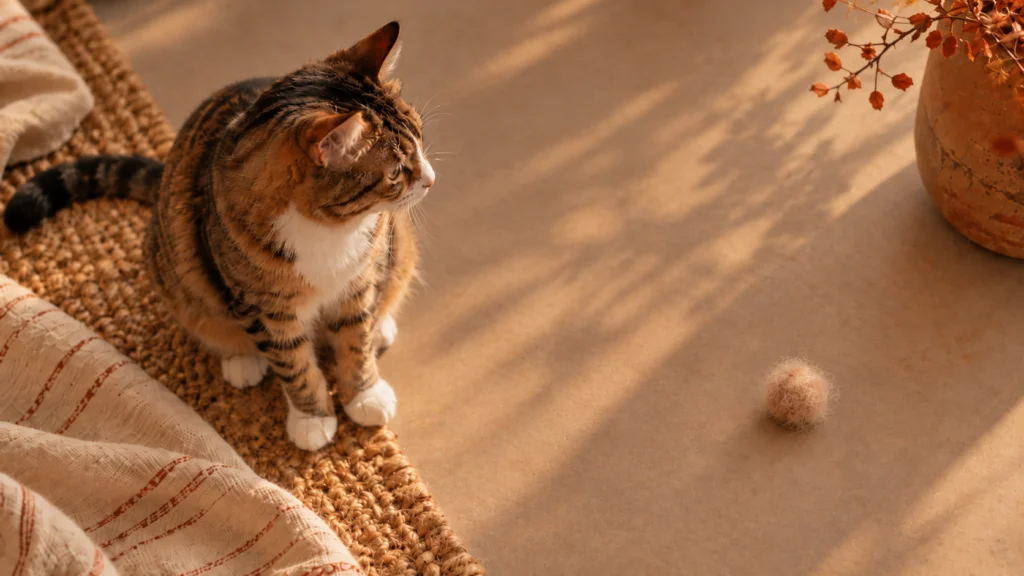
A cat’s lifestyle also influences how this change manifests:
● Outdoor cats: Exposure to natural light cycles can lead to more pronounced seasonal shedding, especially during spring and fall.
● Indoor cats: Artificial lighting and more stable temperatures can cause them to shed more evenly throughout the year, although they may also experience seasonal variations.
The duration of this period depends on each animal, its coat type, and its living conditions. If hair loss is excessive, bald spots appear, or you notice skin irritation, consult a veterinarian to identify the cause.
Proper Brushing for Each Coat Type
Brushing is one of the most effective ways to remove loose hair and prevent it from accumulating on furniture or being ingested by your cat while grooming itself. For best results, it’s important to choose the right tools based on the length and density of your cat’s coat.
Short-haired cats
Even though their coats are short, loose hairs can easily cling to fabrics and accumulate in various corners of the house.
● Recommended tools: Soft-bristled brush, rubber glove, or soft slicker brush.
● Frequency: Two to three times a week, adjusting the routine based on how much hair your cat sheds.
● Technique: Use gentle strokes in the direction of hair growth, from the head to the tail.
Long-haired cats
In breeds such as the Persian or Maine Coon, dead hair can get trapped between the strands and lead to matting, especially under the armpits, on the abdomen, and behind the ears.
● Recommended tools: A soft slicker brush and a metal comb with teeth suitable for your cat’s coat type.
● Frequency: Daily, to prevent tangles and remove loose hair.
● Technique: Work in small sections and avoid pulling. If you encounter a very tight knot, do not use scissors close to the skin; consult a professional if you cannot remove it without causing discomfort.
Cats with a dense undercoat
Some cats have a double coat, consisting of an outer layer and a thinner, denser undercoat. During shedding season, the undercoat can accumulate a considerable amount of dead hair.
● Recommended tools: A comb or slicker brush specifically designed to remove the undercoat.
● Frequency: Several times a week, depending on the density of the coat and the amount of loose hair.
● Technique: Use gentle strokes and avoid applying too much pressure so as not to irritate the skin or damage the outer coat.
To make brushing a pleasant habit, start with short sessions and gradually increase their duration. You can reward your cat with petting or a treat when you’re done.
Preventing Hairballs and Digestive Care
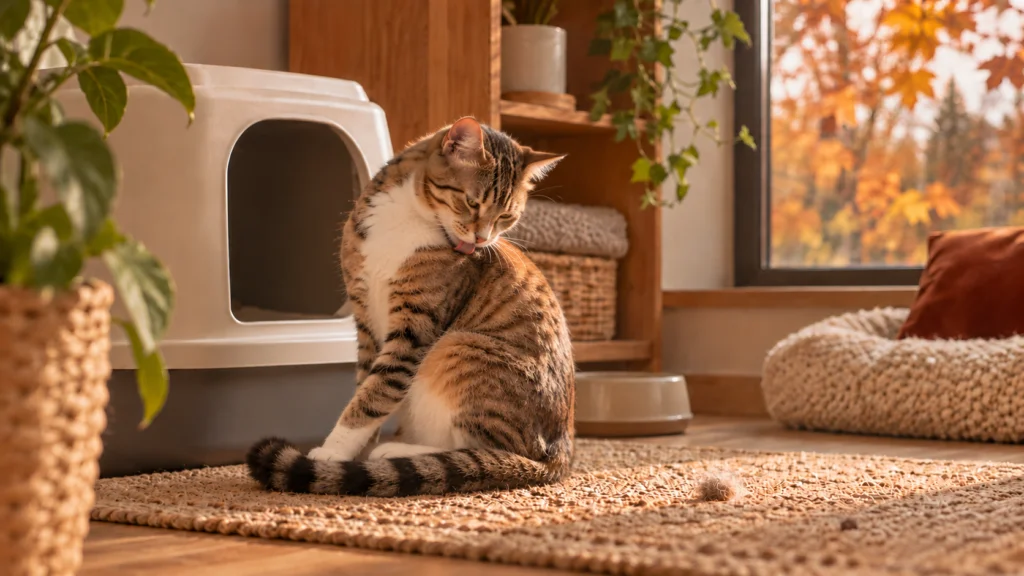
Cats spend a significant amount of time grooming themselves. Their tongues have small, backward-facing keratinized structures that help them remove dirt and loose hair. During this process, they also swallow some strands of hair.
Under normal conditions, the ingested hair usually passes through the digestive system and is eliminated in the feces. However, during shedding season, the amount of hair ingested can increase, leading to the formation of hairballs, also known as trichobezoars.
Signs to watch for include:
● Repeated retching or attempts to vomit.
● Frequent vomiting.
● Loss of appetite or lethargy.
● Constipation or difficulty defecating.
Persistent retching, repeated vomiting, or a lack of bowel movements require veterinary attention. These symptoms should not be attributed solely to hairballs, as they may also indicate other digestive problems.
What to Look for in the Litter Box During Shedding Season
The litter box can provide clues about your cat’s elimination habits. During this season, pay attention to the following changes:
1. Changes in stool: Note if it’s harder than usual or if the frequency changes. The presence of hair alone isn’t enough to determine whether there’s a digestive problem.
2. Straining to defecate: If your cat repeatedly enters the litter box and strains without being able to defecate, it needs to be examined by a veterinarian.
3. Changes in Litter Box Use: If your cat is using the litter box more often than usual or changing its routine, watch for other symptoms and consult your veterinarian if the change persists.
To promote your cat’s well-being, combine regular brushing with a complete, age appropriate diet. Also, make sure fresh water is always available, and consult your veterinarian if you need to adjust your cat’s diet or incorporate specific products to help manage hairballs.
Cleaning the Litter Box During Shedding Season
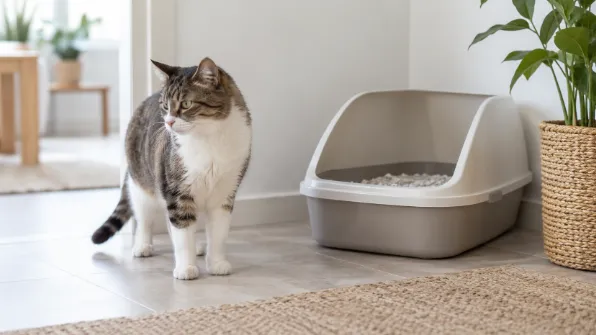
During shedding season, some hairs end up in the litter box when your cat grooms near it, shakes itself off, or digs to cover its waste. This can cause the hair to mix with the litter and make daily cleaning more difficult.
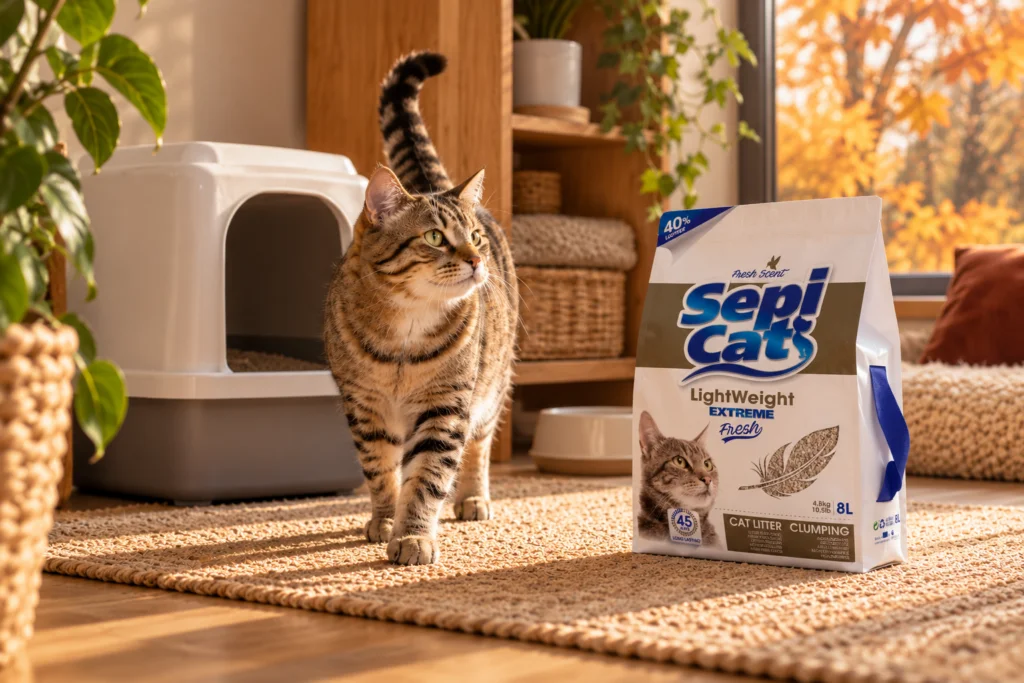
At Sepicat, we offer absorbent, clumping, and biodegradable litter options that make daily hygiene easier. To remove loose hairs without unnecessarily discarding clean litter, follow these steps:
Step 1. Check the surface
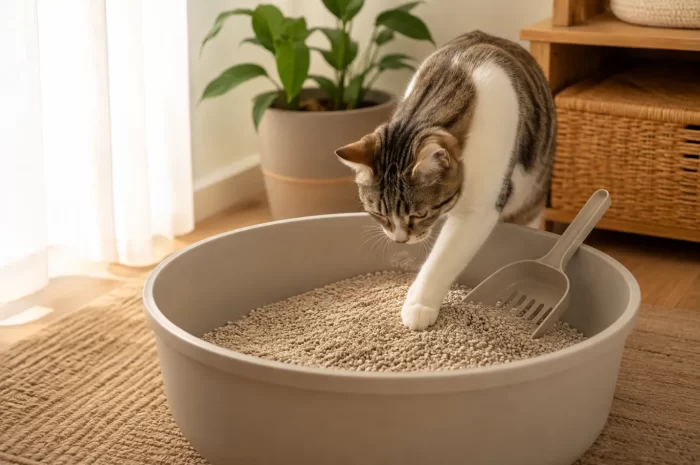
Gently run a clean scoop over the top layer of litter to collect visible hair.
Step 2. Separate the hair from the clumps
Make gentle side-to-side movements with the scoop. If the hair strands get caught in the grooves, you can remove them without taking up too much clean litter.
Step 3. Remove the accumulated hair
Discard the collected hair and check to see if any strands remain visible on the surface or near the edges of the litter box.
Step 4. Clean up common waste
Remove urine clumps and feces as often as recommended for the type of litter you use. Keeping the litter box clean helps maintain a more pleasant environment for your cat.
Clumping litter makes it easier to remove waste by forming compact clumps that can be scooped up with a scoop. This way, you can maintain the litter box’s hygiene and make better use of the clean litter.
Essential Nutrients for a Healthy Coat
Coat health is closely linked to diet. During the shedding cycle, your cat’s body needs nutrients that support hair growth and maintain healthy skin.
To support your cat during shedding season, make sure its complete and balanced diet provides the following nutrients:
● High-quality protein: Fur is primarily composed of keratin, a protein that requires amino acids for its formation. A proper diet provides the nutrients needed to maintain the coat.
● Omega-3 and omega-6 fatty acids: These help maintain the skin barrier and keep the skin in good condition.
● Biotin and other B vitamins: These play a role in various metabolic processes related to skin and coat health.
● Zinc: It plays a role in cell renewal and skin maintenance.
● Water: Adequate hydration supports the body’s normal functioning. Providing fresh water and considering the inclusion of wet food can help meet your pet’s fluid needs.
It is not necessary to administer supplements on your own. If you notice that your cat’s coat is losing its shine, is shedding excessively, or if there are changes in the skin, consult a veterinarian to review their diet and rule out other problems.
Take Care of Your Cat’s Hygiene with Sepicat
At Sepicat, we work to make caring for your pet easier all year round. We have over 35 years of experience offering feline hygiene solutions and products designed to help you keep your cat’s living space clean.
During the fall, regular brushing, a proper diet, and daily litter box cleaning are habits that contribute to your cat’s well-being. Choosing a litter that suits your household’s needs can also simplify your hygiene routine.
We invite you to explore our variety of absorbent, clumping, and biodegradable litters. If you’d like to find the option that best suits your home and your cat’s needs, use the interactive Litter Selector on the Sepicat website.
Frequently Asked Questions
1. How long does the fall shedding season last?
The duration varies depending on each cat, its coat type, and living conditions. If shedding is excessive, bald spots appear, or you notice changes in the skin, consult a veterinarian.
2. Why does my indoor cat shed all year round?
Indoor cats are exposed to more stable lighting and temperature conditions. This can make coat renewal more continuous and less seasonal.
3. When do hairballs require veterinary attention?
If your cat is persistently retching, vomiting frequently, has a lack of appetite, is lethargic, or is having difficulty passing stool, it needs a veterinary evaluation. These symptoms can have various causes and should not automatically be attributed to hairballs.
4. Do I need to bathe my cat during shedding season?
Generally, it is not necessary. Cats maintain their hygiene through grooming, and in most cases, regular brushing is sufficient to remove loose hair. Bathing should be reserved for situations where it is indicated and should be done with products suitable for cats.
5. How does wet food help support my cat’s digestion?
Wet food provides more water than dry food, so it can contribute to daily hydration. However, it does not guarantee the prevention of hairballs, nor does it replace brushing or veterinary care when digestive symptoms appear.