Have you ever wondered how long cats live? The answer depends on several factors — whether they live indoors or outdoors, their diet, veterinary care, and even the level of stress at home. In this clear, straightforward guide, you’ll learn what determines a cat’s life expectancy and what you can do today to help your feline companion live longer — and with better quality of life.
How Long Do Cats Live? Average Lifespan and Lifestyle Differences
- General average: 12–15 years (it’s not uncommon for well-cared-for cats to reach 18–20).
- Indoor cats: tend to live longer thanks to reduced exposure to accidents, fights, and diseases.
- Outdoor cats: have a shorter life expectancy due to greater risks (traffic, predators, poisoning, infectious diseases).
- Fun fact: The official record holder is Crème Puff, a cat who lived to 38 years old.
- Quick tip: If your cat goes outdoors, consider a harness, “catio” or enclosed patio, microchip, and ID tag.
Main Factors Influencing Longevity
1) Lifestyle and Environment
- Indoor vs. outdoor: more safety = fewer risks.
- Environmental enrichment: scratching posts, shelves, hiding spots, “circuits,” and interactive toys help reduce stress and sedentary behavior.
2) Nutrition and Weight Control
- Provide a complete, balanced diet adapted to their life stage.
- Keep their Body Condition Score within a healthy range — obesity shortens lifespan and worsens joint, heart, and metabolic diseases.
3) Physical Activity and Mental Stimulation
- Daily play: 10–15 minutes, 2–3 times a day (depending on age and health).
- Use wand toys, food puzzles, and rotate toys weekly to avoid boredom.
4) Stress and Well-being
- Maintain predictable routines, provide enough litter boxes, high resting spots, hiding areas, and pheromone diffusers if recommended by your vet.
5) Bond and Socialization
- Gentle petting, brushing, and short play sessions promote emotional well-being — especially important for senior or shy cats.
Veterinary Care Schedule by Life Stage
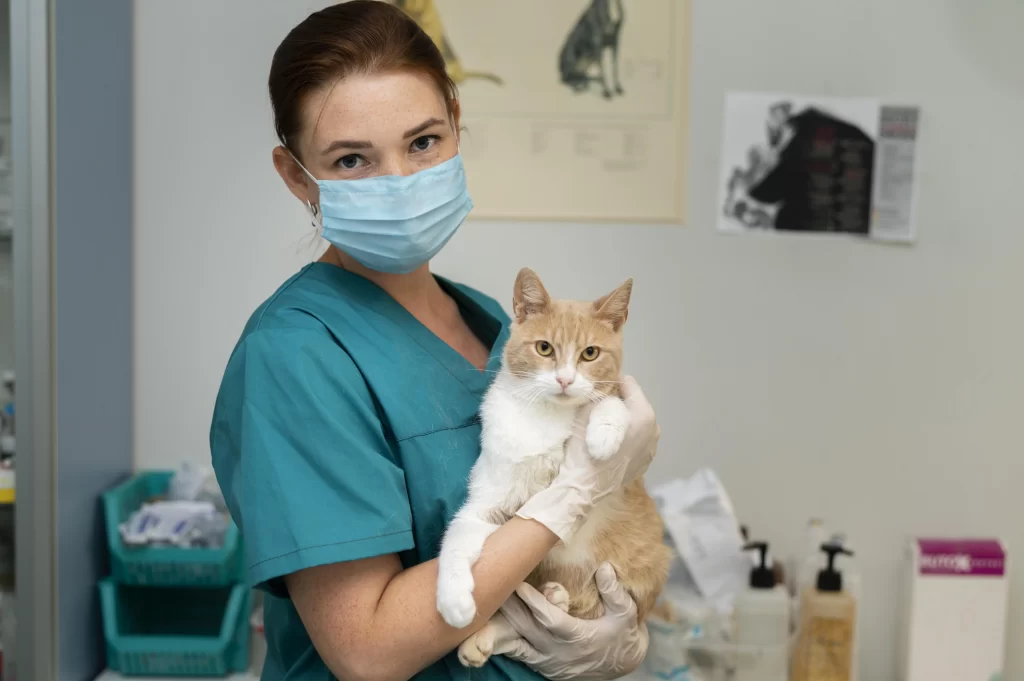
General frequency: at least one check-up per year; for senior cats (over 10 years), every 6 months. Your vet will tailor tests and frequency based on your cat’s history.
Kitten (0–1 year)
- Core vaccinations, deworming, microchipping.
Spaying/neutering (if not breeding) and nutritional guidance.
Young Adult (1–6 years)
- Annual check-up, dental control, parasite prevention.
- Weight monitoring and enrichment routines.
Mature Adult (7–10 years)
- Check-ups every 12–24 months, including basic blood tests and blood pressure monitoring.
- Kidney and thyroid function assessments if necessary.
Senior (Over 10 years)
- Check-ups every 6–12 months, including blood and urine tests, blood pressure, and dental evaluation.
- Adjust diet (high-quality protein, calorie control, suitable texture) and manage pain if present.
Always: follow a vaccination plan (core and non-core depending on risk), continuous parasite prevention, and professional dental cleanings when needed.
Common Cat Diseases

Like any living being, cats can face various health problems. The most frequent include:
- Chronic kidney disease.
- Feline diabetes.
- Heart conditions.
- Cancer.
- Obesity and related complications.
Early detection can make the difference between a few extra years and a long, healthy life. Learn more in our blog “How to Prevent Common Diseases in Cats.”
Cat Breeds with Longer or Shorter Lifespans (and Why)
Genetics also play a role in feline longevity. Some breeds known for longer lifespans include:
- Siamese: 15–20 years.
- Russian Blue: 15–18 years.
- Burmese: up to 20 years.
- Ragdoll: 15–17 years.
On the other hand, breeds like the Maine Coon or Sphynx usually have slightly shorter life expectancies, partly due to genetic predisposition to certain diseases.
How to Help Your Cat Live Longer
- Spay or neuter if not intended for breeding.
- Maintain a healthy weight (adjust portions and treats; use interactive feeders).
- Play daily and offer enrichment (scratching posts, climbing spaces, tunnels).
- Regular vet check-ups by life stage (annually; every 6–12 months for seniors).
- Keep vaccinations and parasite control up to date.
- Dental hygiene: gradual toothbrushing + professional cleanings when needed.
- Calm, predictable home: routines, enough litter boxes, and safe zones.
- If allowed outdoors: use a harness/catio, ID tag, and microchip
How can I tell my cat’s age if I adopted them as an adult?
A veterinarian can estimate it by examining their teeth, eyes, and physical condition.
Is it true that sterilized cats live longer?
Yes. Spaying/neutering reduces cancer risks and prevents behaviors that expose cats to danger. Read our blog “Spaying and Neutering Cats: Key Health and Behavioral Benefits” to learn more.
Is a chubby cat a happy cat?
No. Obesity lowers quality of life and shortens lifespan.
What’s the difference between the lifespan of a stray cat and a house cat?
Stray cats usually live less than 7 years due to risks like fights, accidents, and diseases.
Are there supplements to help cats live longer?
Some may support joint or kidney health, but they should only be given under veterinary supervision.