When we own a cat, his/her wellbeing becomes a family priority. As owners, we want the best for our pet and it is important that we are always attentive to any sort of behavioral changes we may observe.
Cats, having naturally nervous personalities, feel intense stress when facing any situation that changes their routine. Moving out, a new pet or changes in weather may seem pretty normal to human beings, but in cats it can cause huge amounts of anxiety.
If you notice that your cat stops using its litter box, shows unusually aggressive behaviour, pets itself too much or reduces its food intake; it is very likely that he is suffering from chronic stress. Keep on reading if you want to know our tips and tricks to reduce stress in cats.
- Identify the cause
- Give your cat love and affection
- Create a comfortable and safe space
- Feline pheromones
- Establish a routine
Identify the cause
First of all, it is important that we know the cause of the alterations in behavior, in this way we can better understand the situation our pet is going through. There are various factors that can cause anxiety, such as,
- Moving
- A baby’s arrival
- New people
- Loud and continuous noises
- Furniture changes
- Vet visits
- Lack of physical activity
Identify if there have been any sort of changes in your home recently, and analyze in which way they can be improved for the comfort of your cat. If it’s possible, try to avoid sudden alterations, and, if necessary, we recommend introducing them gradually to avoid stress and confusion.
Give your cat love and affection
Most of the time our hectic lifestyle doesn’t allow us to take a break, and everyday chores can be so overwhelming that our pets may feel abandoned. Remember that we are the most important thing for our animals, and our attention is fundamental for their happiness.
Even if it’s only for a few minutes, we should pet our cat every single day. Having a schedule is highly advised, in which you set a time to play with your pet, this will give him/her a feeling of stability that will help with relaxation.
Create a comfortable and safe space
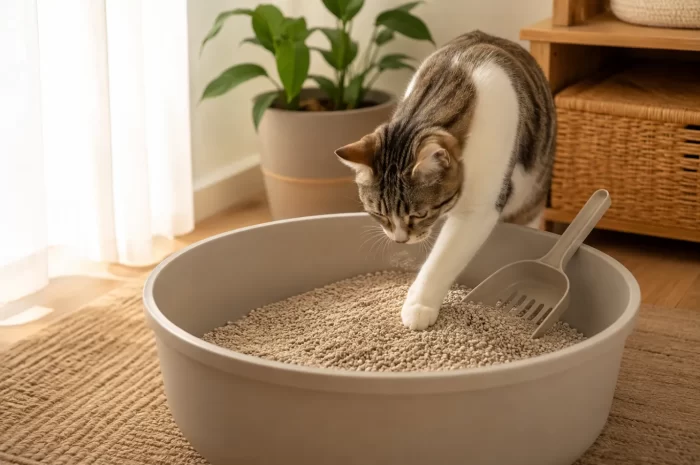
Cats need to have their private space at home, in which they feel protected and can come back every time they feel uncomfortable. Find a spot in your house where to put your pet’s bed, toys, scratcher and litter and try to always keep it clean.
You should verify that all your cat’s belongings are created for his/her particular needs, on the contrary, it could be causing considerable amounts of unnecessary stress and anxiety.
A dirty litter box or inadequate litter could be causing great discomfort in your cat, considering that certain types of litter cause pain on your cat’s paws, not to mention allergic reactions. We advise that you select the type of sand best suited for your cat, and if you are using the incorrect one, make the change periodically.
Feline pheromones
Pheromones can considerably help to reduce stress, and it is suggested to use them as a preventive method when there is going to be a sudden change in your home, such as the arrival of new people or a long trip. They are an imitation of the natural pheromones that cat’s produce when they need to feel safe and/or mark territory in dangerous situations, which is why they are so effective and highly recommended.
Establish a routine
Cats love routines, this relaxes them and gives them stability. To achieve this, you need to set specific times for feeding, which will also benefit their digestion and overall health.
It is important that we are well informed on the amount of food our cat needs, as well as the frequency and timing recommended for feeding our particular cat. The needs of our pet will depend on weight, age and the growth stage they are in. We advise you to consult with your veterinarian before making this important decision.
As pet owners we need to understand that they can’t communicate verbally, which makes it very difficult for us to understand their needs. When in trouble, this can create a great deal of anxiety, which results in behavioral changes that are very difficult to grasp on. This is stressful not only for the cat, but also for the owner and the entire family. It can get complicated, but we cant forget that acting with patience and love will always be the best answer
Share in the comments if you know any other solution to reduce stress and keep on reading our blog to know more about cat care.